

By Adebayo Taofiq Aribidesi.(PAO LASTMA)
In the intricate tapestry of urban mobility management, where discipline, responsiveness and human engagement intersect daily under intense pressure, the Lagos State Traffic Management Authority (LASTMA) has, in recent times undergone a quiet yet profound transformation.
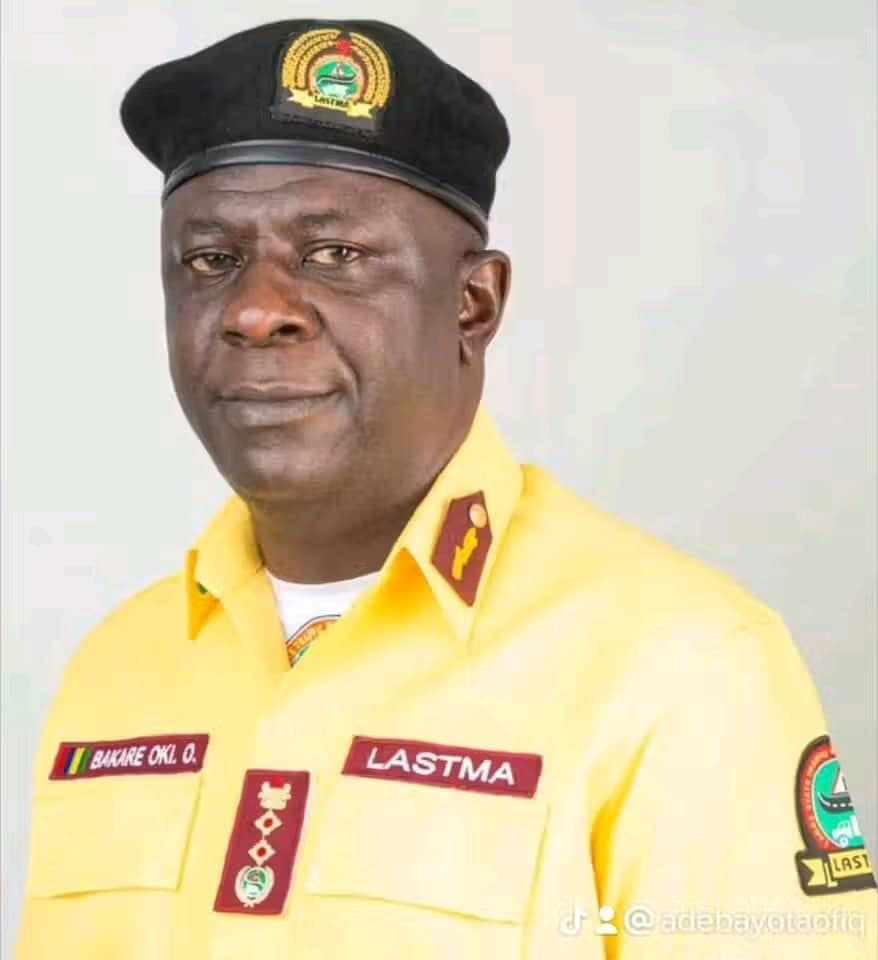
At the nucleus of this renaissance is a deliberate and sustained investment in the training and retraining of personnel an initiative vigorously championed by the incumbent General Manager, Olalekan Bakare-Oki.
This renewed emphasis on capacity development is not merely an administrative routine; it is a strategic recalibration of institutional ethos.
It reflects an understanding that the effectiveness of any traffic management system is ultimately anchored in the competence, comportment and cognitive preparedness of those entrusted with its execution.
Historically, traffic management in a megacity like Lagos has been fraught with multifaceted challenges ranging from infrastructural limitations and erratic driver behavior to rapid urban expansion.
Yet, under the stewardship of Bakare-Oki, there has emerged a paradigm shift: a recognition that the human element properly trained, ethically grounded and continuously refined remains the most potent instrument for order and efficiency on the roads.
The training architecture introduced by the current administration led by Bakare-Oki is both comprehensive and forward-thinking.
It transcends rudimentary traffic control drills, encompassing modules on emotional intelligence, conflict resolution, crisis management, public communication and technological adaptability.
Officers are no longer seen merely as enforcers of traffic laws but as ambassadors of civility and order, whose interactions with the public significantly shape the perception of governance.
One of the most conspicuous outcomes of this initiative is the noticeable improvement in Officer-public relations. Where there was once tension and occasional confrontation, there is now a growing culture of mutual respect.
LASTMA Officials, equipped with refined interpersonal skills, are better able to de-escalate volatile situations, communicate directives with clarity and foster cooperation among motorists and commuters alike.
Equally significant is the enhancement of operational efficiency. Through regular retraining sessions, personnel are exposed to modern traffic management techniques, including data-driven deployment strategies and real-time incident response coordination.
This has translated into quicker clearance of obstructions, more systematic handling of accidents and a reduction in secondary incidents often caused by poor traffic control.
Moreover, the retraining programme has instilled a renewed sense of professionalism and pride among officers. In an environment where morale can easily be eroded by the rigours of the job, continuous learning serves as both motivation and validation.
Officers increasingly perceive themselves as part of an evolving institution committed to excellence, rather than as static functionaries bound by routine.
Another critical dimension of this transformation is the integration of ethics and accountability into the training curriculum.
Recognising that public trust is the cornerstone of effective governance, the leadership has prioritised integrity as a core value. Officers are sensitised to the ethical implications of their conduct, with clear emphasis on transparency, fairness and adherence to due process.
This has contributed to a gradual but perceptible decline in reports of misconduct, reinforcing public confidence in the Authority.
The ripple effects of these reforms extend beyond immediate traffic management outcomes. A more efficient and courteous LASTMA workforce contributes to broader socio-economic stability.
Reduced traffic congestion enhances productivity, lowers stress levels among commuters and facilitates smoother movement of goods and services an indispensable factor in a city that serves as Nigeria’s commercial nerve centre.
Furthermore, the proactive training approach positions LASTMA to better navigate the future of urban mobility.
As Lagos continues to evolve with increasing adoption of intelligent transport systems and digital monitoring tools the capacity of personnel to adapt becomes paramount.
By embedding a culture of continuous learning, the current administration ensures that the Authority remains resilient and responsive in the face of emerging challenges.
It is also noteworthy that this transformation has not been executed in isolation. Strategic collaborations with relevant stakeholders, including emergency response agencies and training institutions have enriched the quality and scope of the programmes.
Such partnerships underscore a holistic understanding that traffic management is an ecosystem requiring coordinated effort and shared expertise.
In essence, the impact of training and retraining under the leadership of Olalekan Bakare-Oki is both tangible and far-reaching.
It has redefined operational standards, revitalised institutional culture and repositioned LASTMA as a more responsive, professional and citizen-centric Agency.
As Lagos continues its inexorable march toward becoming a truly global megacity, the importance of such visionary leadership cannot be overstated.
By investing in people the most critical asset of any organisation Bakare-Oki has not only strengthened LASTMA’s present capabilities but has also laid a durable foundation for its future.
In the final analysis, the story of LASTMA’s ongoing transformation is a testament to the power of purposeful leadership and the enduring value of knowledge.
It affirms a simple yet profound truth: that when individuals are equipped, empowered and inspired, institutions are inevitably elevated and society, in turn, reaps the dividends.